Chapter 8 - Magnetism
Comprehensive Questions & Answers for Class 9 Physics (Punjab Board)
Temporary and Permanent Magnets
Temporary Magnets:
Temporary magnets are the magnets that work in the presence of a magnetic field of permanent magnets. Once the magnetic field vanishes, they lose their magnetic properties.
Example: Soft iron, paper clips, office pins and iron nails.
Permanent Magnets:
Permanent magnets retain their magnetic properties. They are either found in nature or artificially made by placing objects made of steel and some special alloys in a
strong magnetic field for a sufficient time.
Example:
- Cobalt
- Alnico
- Ferrite
Magnetic Field
Definition:
A magnetic field is the region around a magnet where an other magnetic object experiences a force on it.
Magnetic Lines of Force
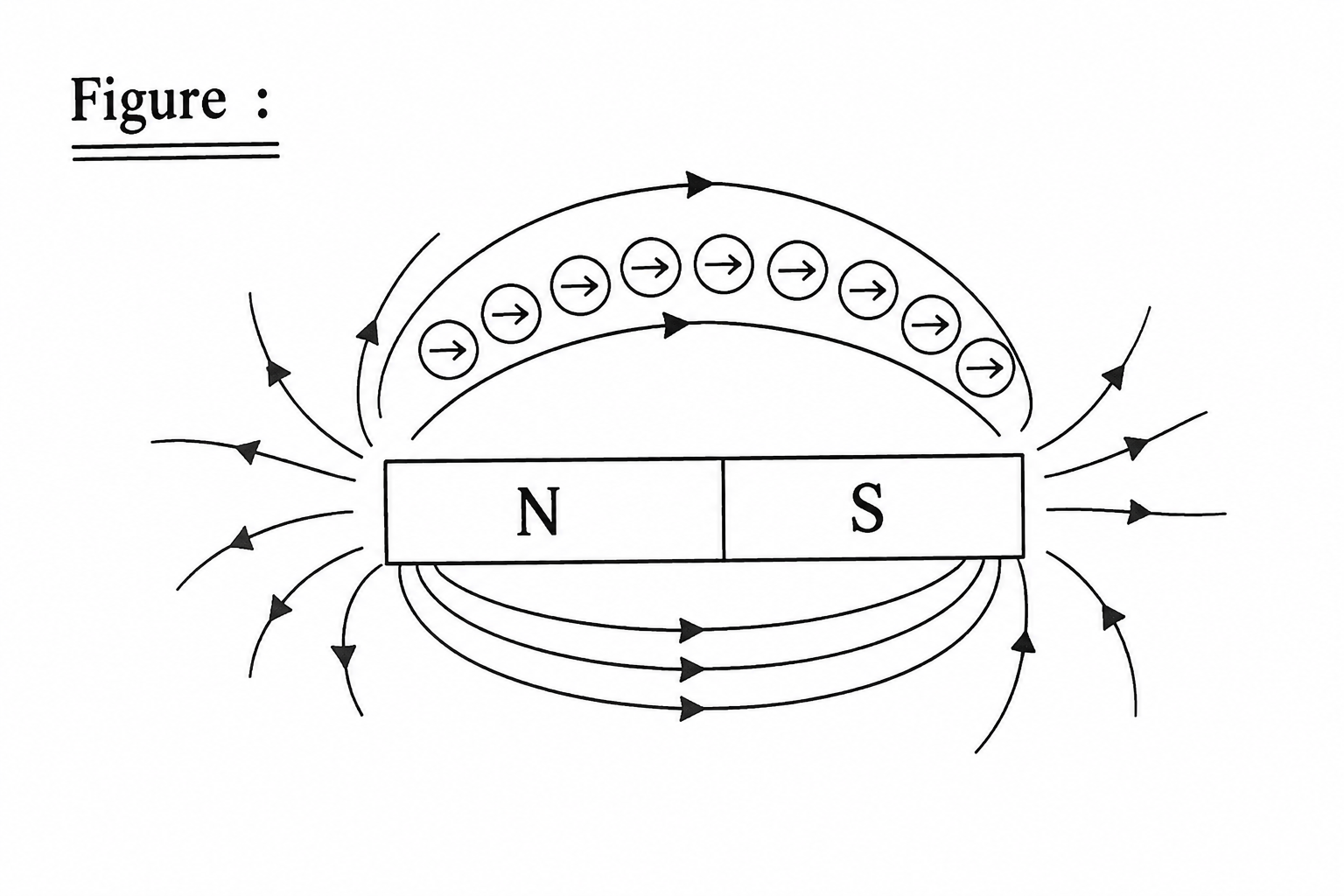
Magnetic lines of force are imaginary lines that represent the direction and strength of the magnetic field. They always travel from north to south pole of a magnet.
Permanent Magnets and Electromagnets (Uses)
Uses of Permanent Magnets:
i. They are essential parts of DC motors and DC electric generators.
ii. Permanent magnets are used in the moving coil loud-speakers.
iii. These are very commonly used in door catchers.
Uses of Electromagnets:
i. Electric bell
ii. Telephone receiver
iii. Circuit breaker
Magnetic Domain
The group of atoms in ferromagnetic material form a region of about 0.1mm size that is highly magnetized. This region is called a magnetic domain. Each domain behaves as a small magnet with its own north and south poles.
Magnetic Field of Current-Carrying Long Coil
A uniform magnetic field is formed inside a current-carrying long coil, also known as a solenoid.
Paramagnetic vs Diamagnetic Materials
Paramagnetic materials:
a. Definition:
The spin axes of the electrons in an atom are so oriented that their fields support one another and the atoms behaves like a tiny magnet, the materials with such atoms
are called paramagnetic materials.
b. Example:
Aluminium and lithium.
Diamagnetic materials:
a. Definition:
Produced by both orbital and spin motions of the electrons in an atom may add up to zero. In this case, the atom has no resultant field. The materials with such atoms
are called diamagnetic materials.
b. Example:
Copper, bismuth and water.
Storage and Labeling of Bar Magnets
The magnetic should be stored with opposite poles (N-S) facing each other to reduce external magnetic fields. P and Q are likely spacers (e.g., wood or non-magnetic materials) to prevent the magnets from sticking together.
Magnetization of Steel Bar Using Solenoid
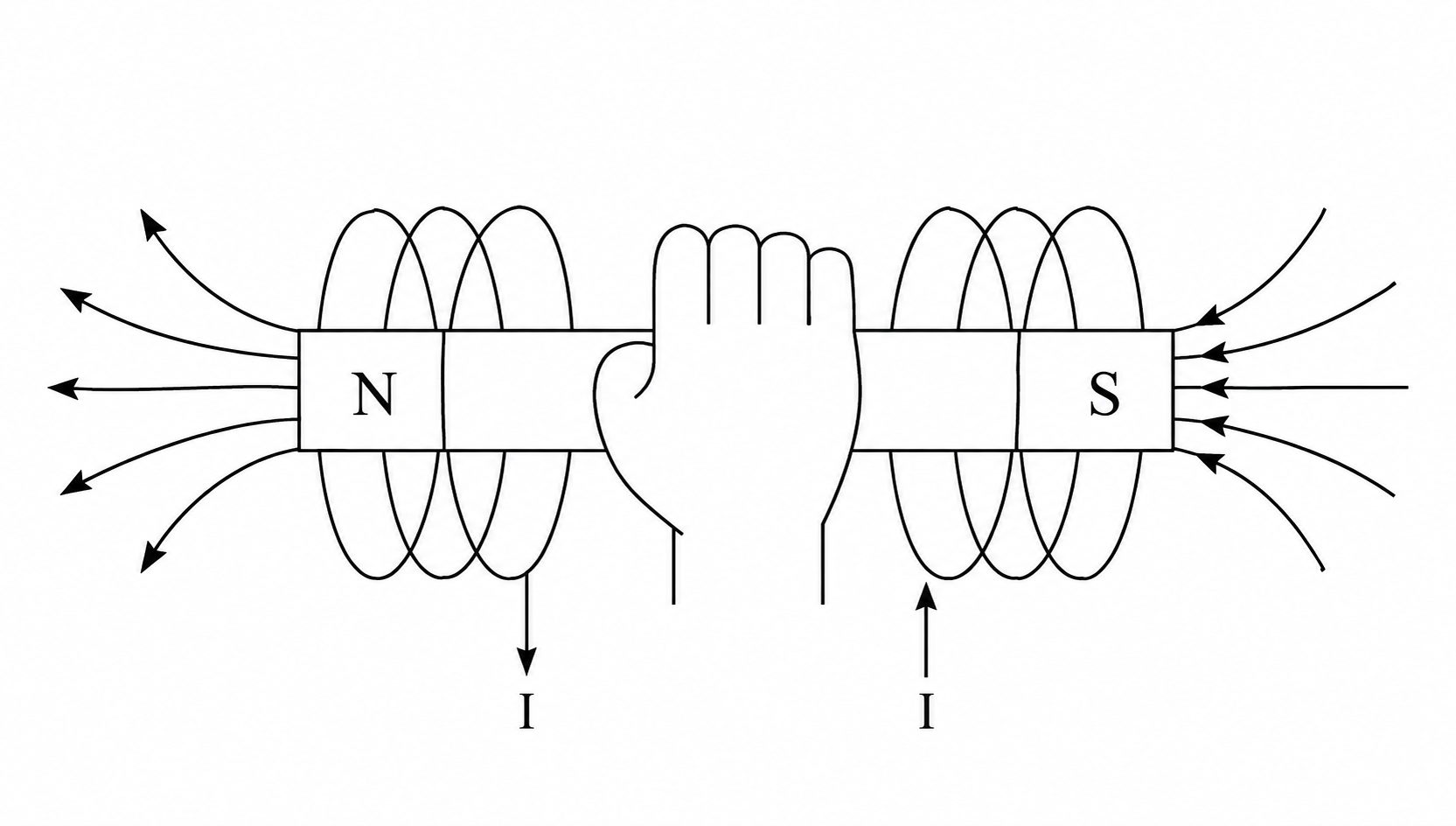
The solenoid should be connected to a DC power source. Using the right-hand grip rule, direct the current so that the fingers curl along the current, and the thumb points towards the N-pole at end A.
Compass Needle Between Two Bar Magnets
The poles should be labeled such that the N-pole of one magnet and the S-pole of the other face the gap. The field lines flow from N to S, aligning the compass needle in the north-south direction.
Electromagnetic Induction
Yes, a changing magnetic field induces an electric current. This is electromagnetic induction.
Example:
In a generator, a rotating coil in a magnetic field produces electric current.
Magnetic Field of Four Solenoids in a Circle
The direction of the current should be such that the solenoids produce a net magnetic field towards the solenoid with no current. This can be achieved by arranging the current directions to create reinforcing fields from the active solenoids toward the inactive one.
Identification of Magnet vs Magnetic Material
The repulsion between like poles is a real test to identify a magnet.
Identification:
To identify whether an object is a magnet or simply a magnetic material, we can bring its one end close to any pole of a suspended bar magnet. If it is attracted, then we can conclude that the end of the object is either of opposite pole to that of the suspended magnet or it is simply a magnetic material. Then we should bring the same end of the object close to the other end of the suspended magnet. If the object is again attracted, it is not a magnet but it is a magnetic material.
If it is repelled by the other end of the suspended magnet, then the object is a magnet.
Strength of Magnetic Field Using Magnetic Lines of Force
1. Strength of magnetic field:
i. The strength of magnetic field is predicted proportional to the number of magnetic lines of force passing through unit area placed perpendicular to the lines.
ii. Thus, the magnetic field is stronger in regions where the field lines are relatively close together and weaker where these are far apart.
iii. Example:
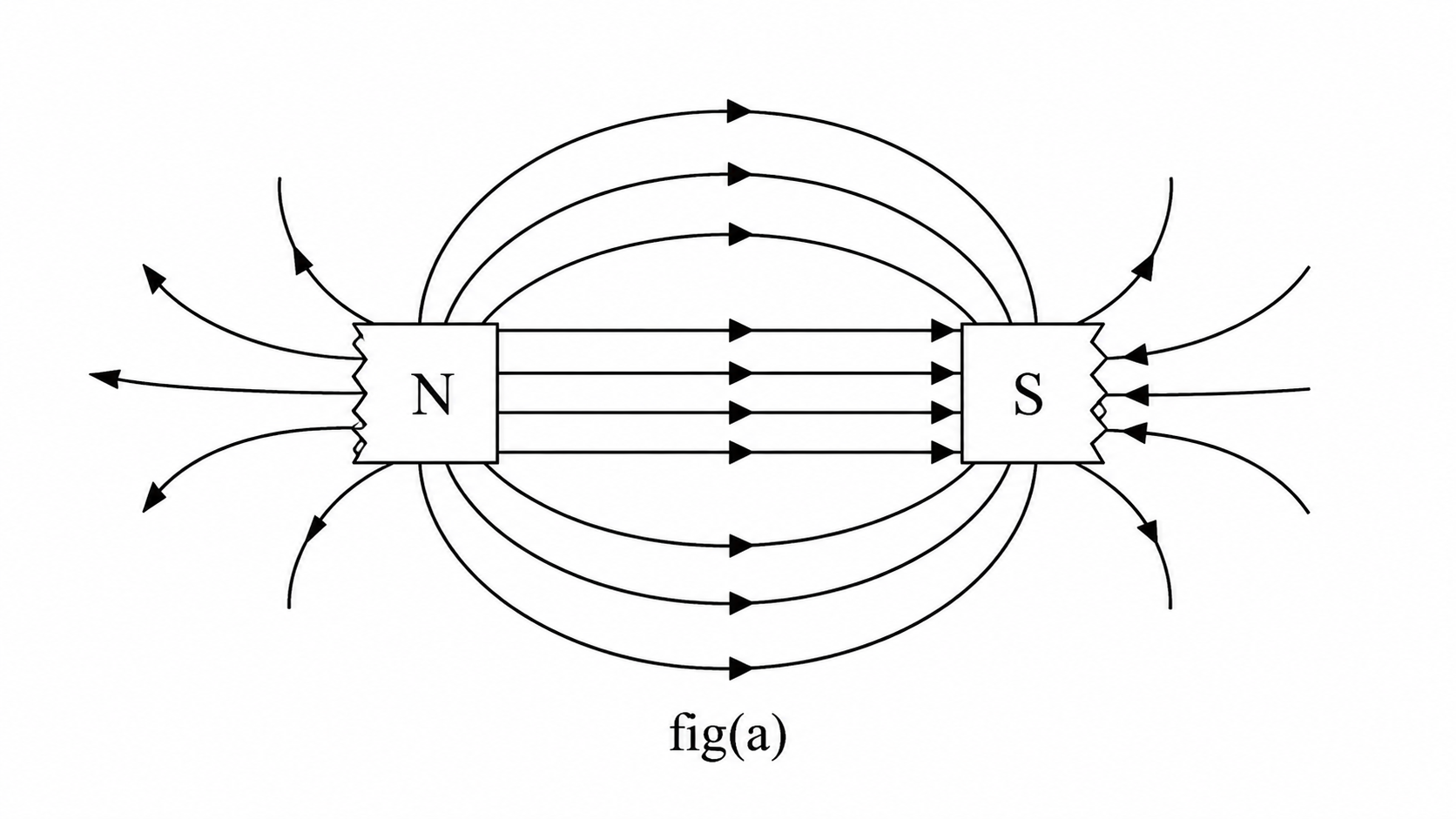
For example in fig(a), the lines are closest together near north and south poles indicating that the strength of the magnetic field is stronger in these regions. Away from the poles, the magnetic field becomes weaker.
2. Pattern for two-magnets:
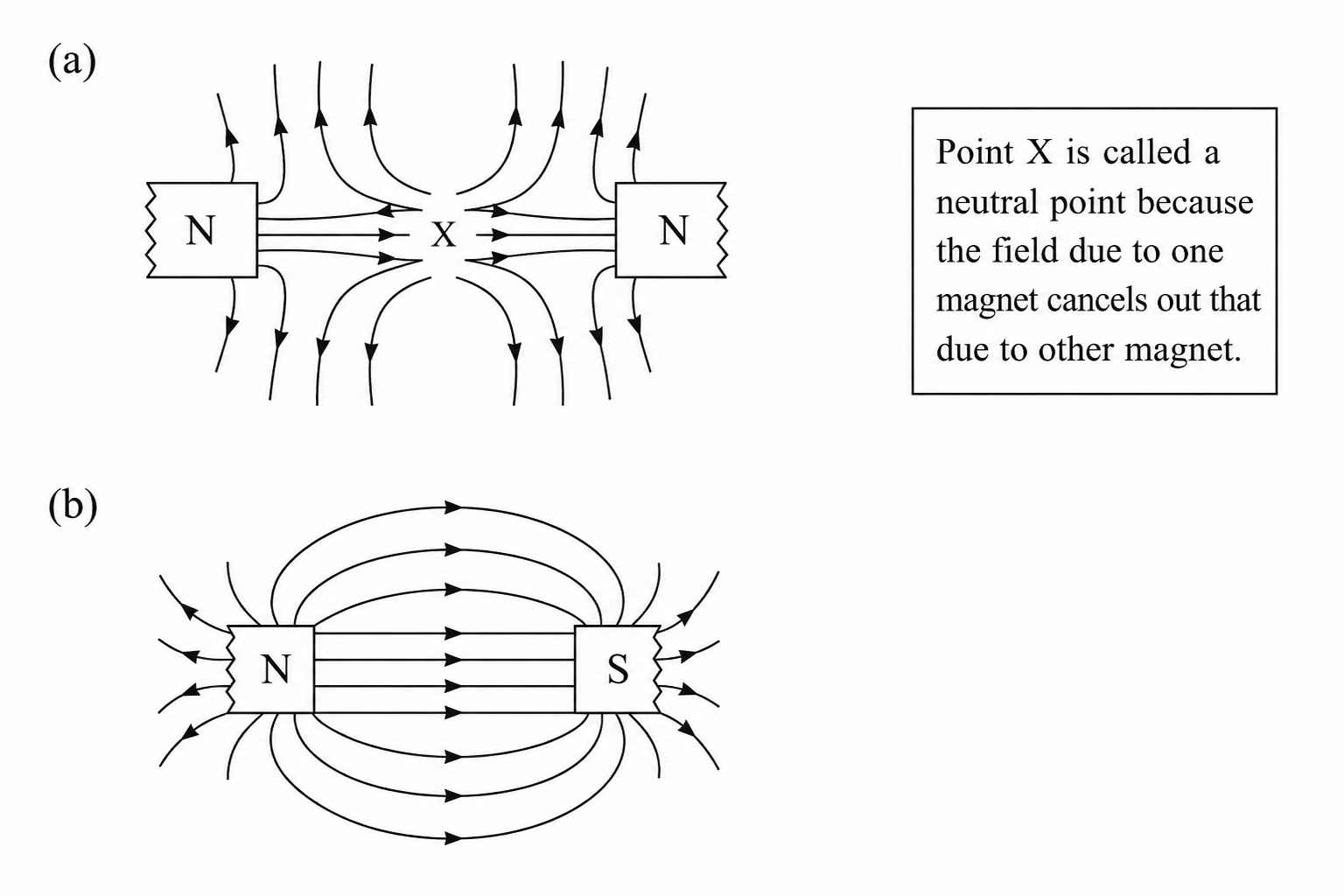
In case, the two magnets are placed close to each other, their combined magnetic field can also be drawn by using the compass needle.
Figure:
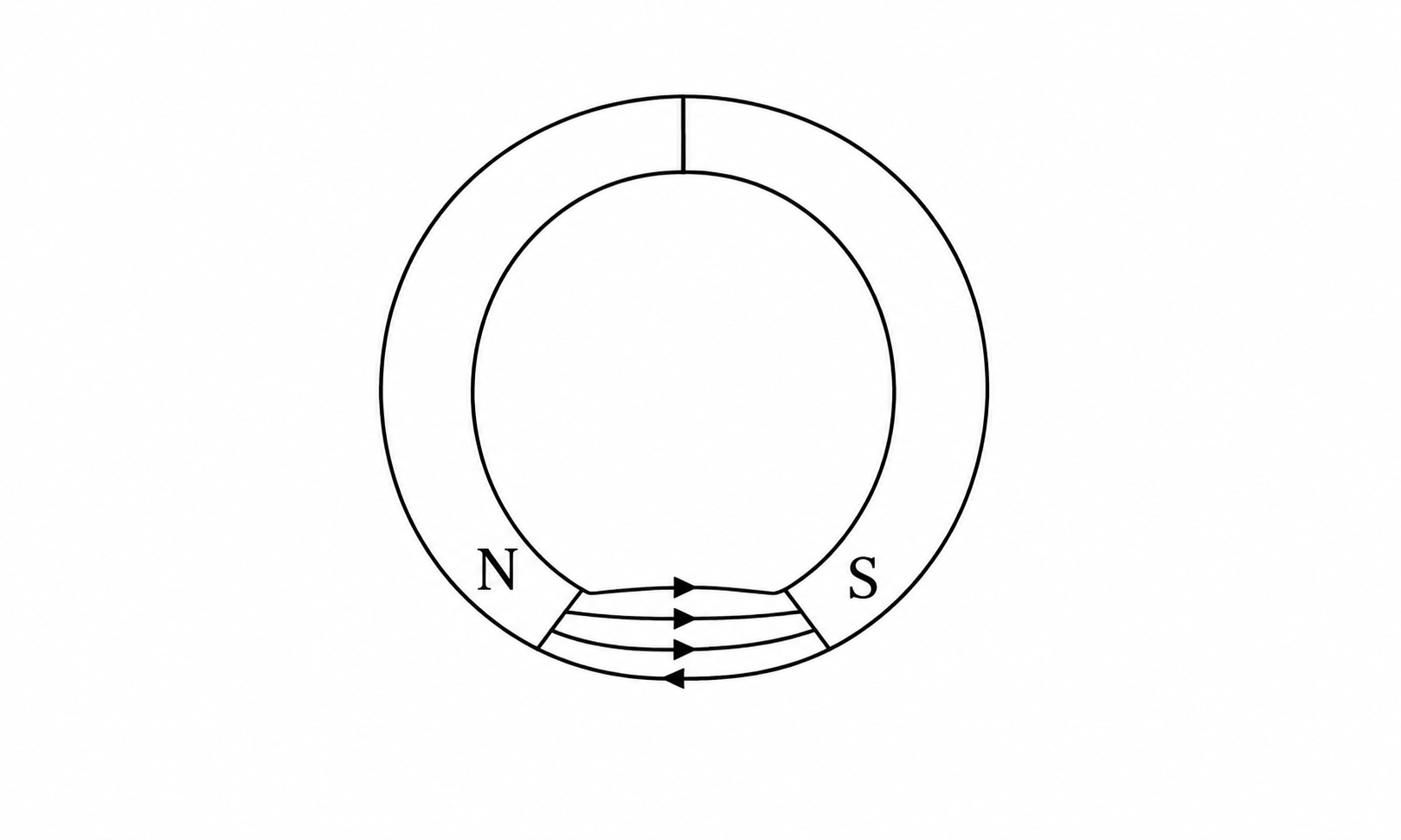
3. Pattern of a horse-shoe magnet:
The pattern of horse-shoe magnet is represented below in figure. The field is almost uniform between the poles except near the edges.
Circuit Breaker (Definition & Diagram)
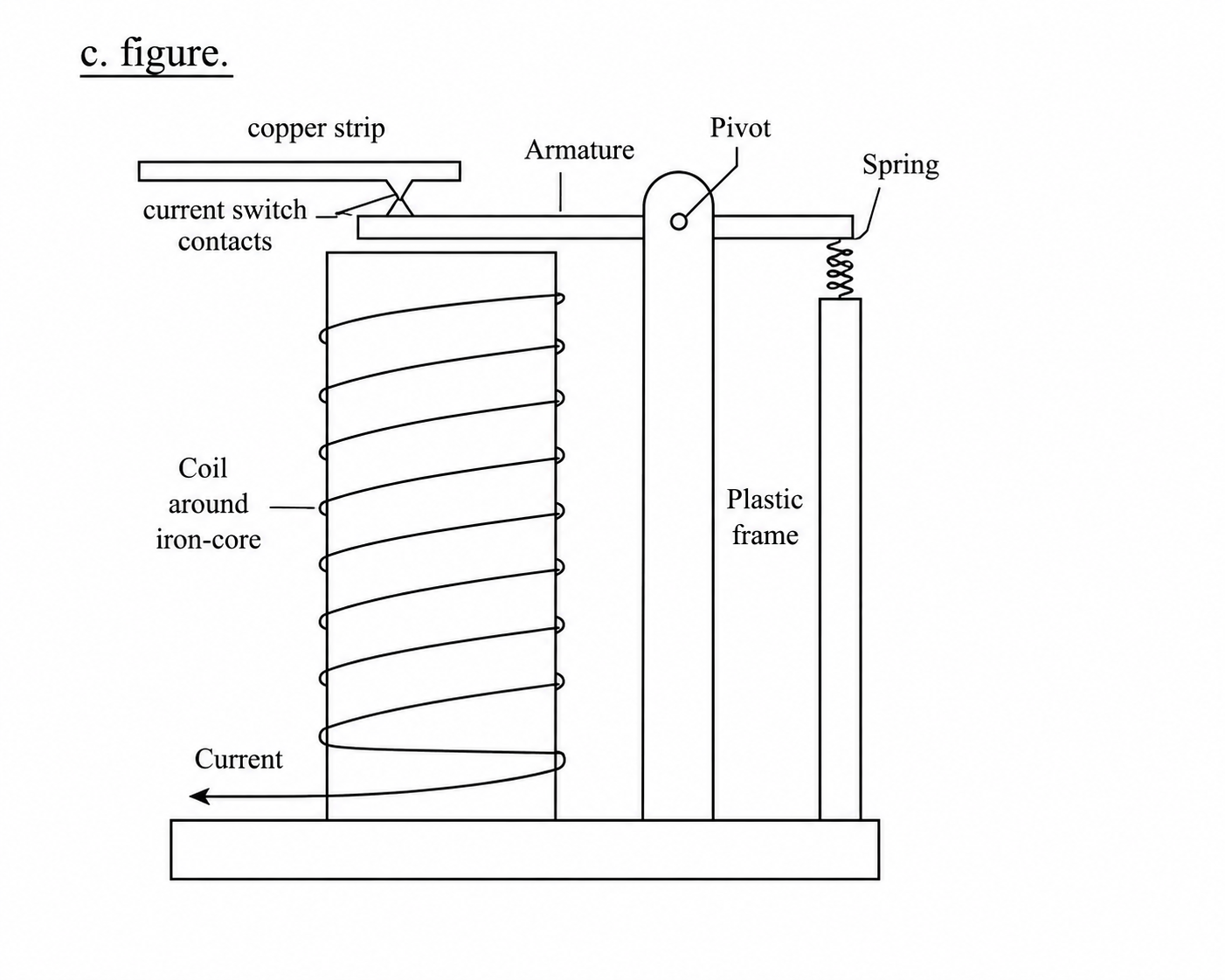
Circuit breaker:
a. definition:
A circuit breaker is designed to pass a certain maximum current through it safely. If the current becomes excessive, it switches OFF the circuit. Thus, electric appliances
are protected from burning.
b. Working:
As shown in the figure below, inside a circuit breaker, the current flows along a copper strip, through the iron armature and coil of electromagnet. The electromagnet
attracts the armature. If the current is large enough, the armature is detached from the copper strip and the circuit breaks.
Magnet Attracts Only Magnetic Materials
It is observed that the magnetic field of a bar magnet is like the field produced by a solenoid (long coil of wire) carrying current.
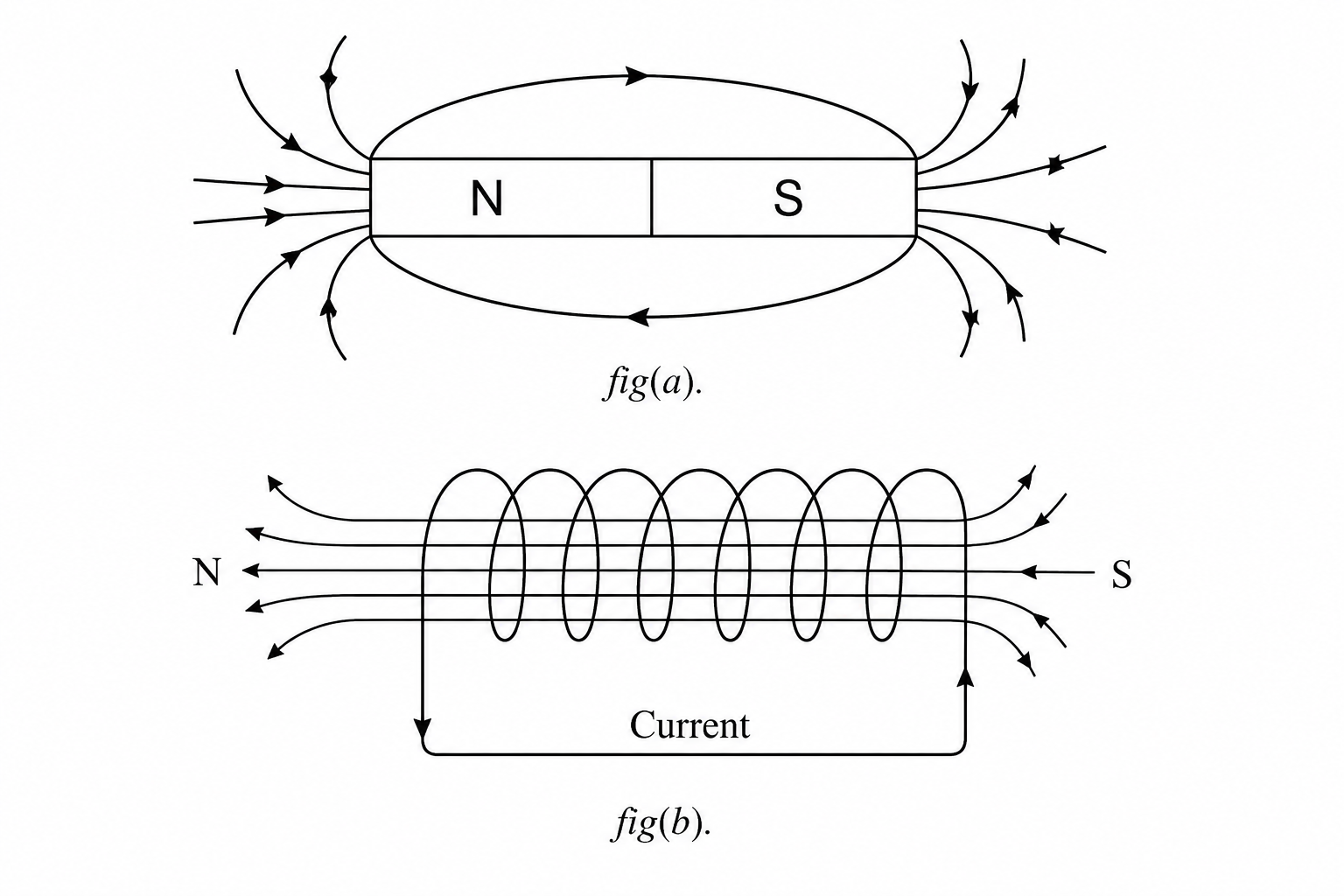
It suggests that all magnetic effects are due to moving charges. In case of a solenoid, charges are moving in the wire. The motion responsible for the magnetism in a magnet is due to electrons within the atoms of the
material.
We know that an electron is a charged particle. Also, each electron in an atom is revolving about the nucleus and at the same time, it is spinning about an axis through it. The rotation and spin both give rise to a magnetic
field. Since there are many electrons in an atom, their rotations and spins may be so oriented to strengthen the magnetic effects mutually or to cancel the effects of one another. If an atom has some resultant magnetic field,
it behaves like a tiny magnet. It is called a magnetic dipole. This magnetic behaviour of atom allows the material to be attracted to magnetic field of magnet.
Paramagnetic, Diamagnetic and Ferromagnetic Materials
1. Paramagnetic materials
a. Definition:
If the orbital and spin axes of the electrons in an atom are so oriented that their fields support one another and the atom behaves like a tiny magnet, the materials with such atoms are called paramagnetic materials.
b. example
aluminium and lithium
2. Diamagnetic materials
a. Definition:
Magnetic fields produced by both orbital and spin motions of the electrons in an atom may add up to zero. In this case, the atom has no resultant field. The materials with such atoms are called diamagnetic materials.
b. example
copper, bismuth, water etc.
3. Ferromagnetic materials
a. Definition:
The solid substances such as iron in which cancellation of any type does not occur for large groups of neighbouring atoms of the order of 10^18 because they have electron spins that are naturally aligned parallel to each other. These are known as ferromagnetic materials.
b. example
steel, nickel, cobalt etc
ferromagnetic materials are suitable for Magnet Formation
Ferromagnetic materials are suitable for making magnets.
1. Reason:
The magnetism induced in a ferromagnetic material can be surprisingly large in the presence of weak external field. In some cases, induced field is a thousand times
stronger than the external field. That is why, high field electromagnets are made by using cores of soft iron or some other ferromagnetic material.
2. Explanation:
The domains in a ferromagnetic material are randomly oriented as shown in figure below:
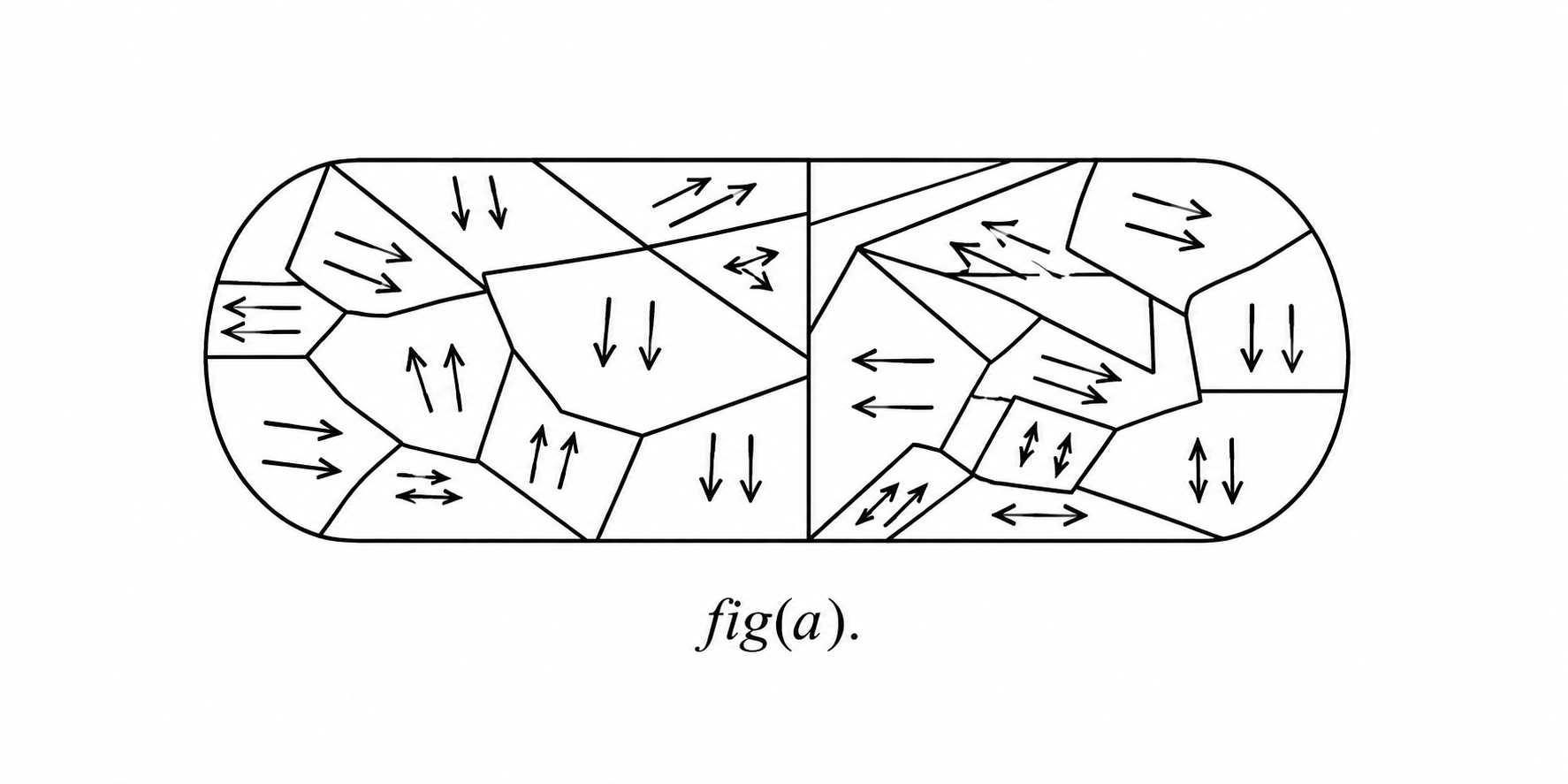
The magnetic fields of the domains cancel each other so the material does not display any magnetism.
The external magnetic field penetrates the unmagnetized iron and induces magnetism in it by causing two effects on the domains. Those domains whose magnetism is parallel or nearly parallel to the external magnetic field grow in size at the expense of other domains that are not oriented. In addition, the magnetic alignment of the other domains rotates and became oriented in the direction of external field.
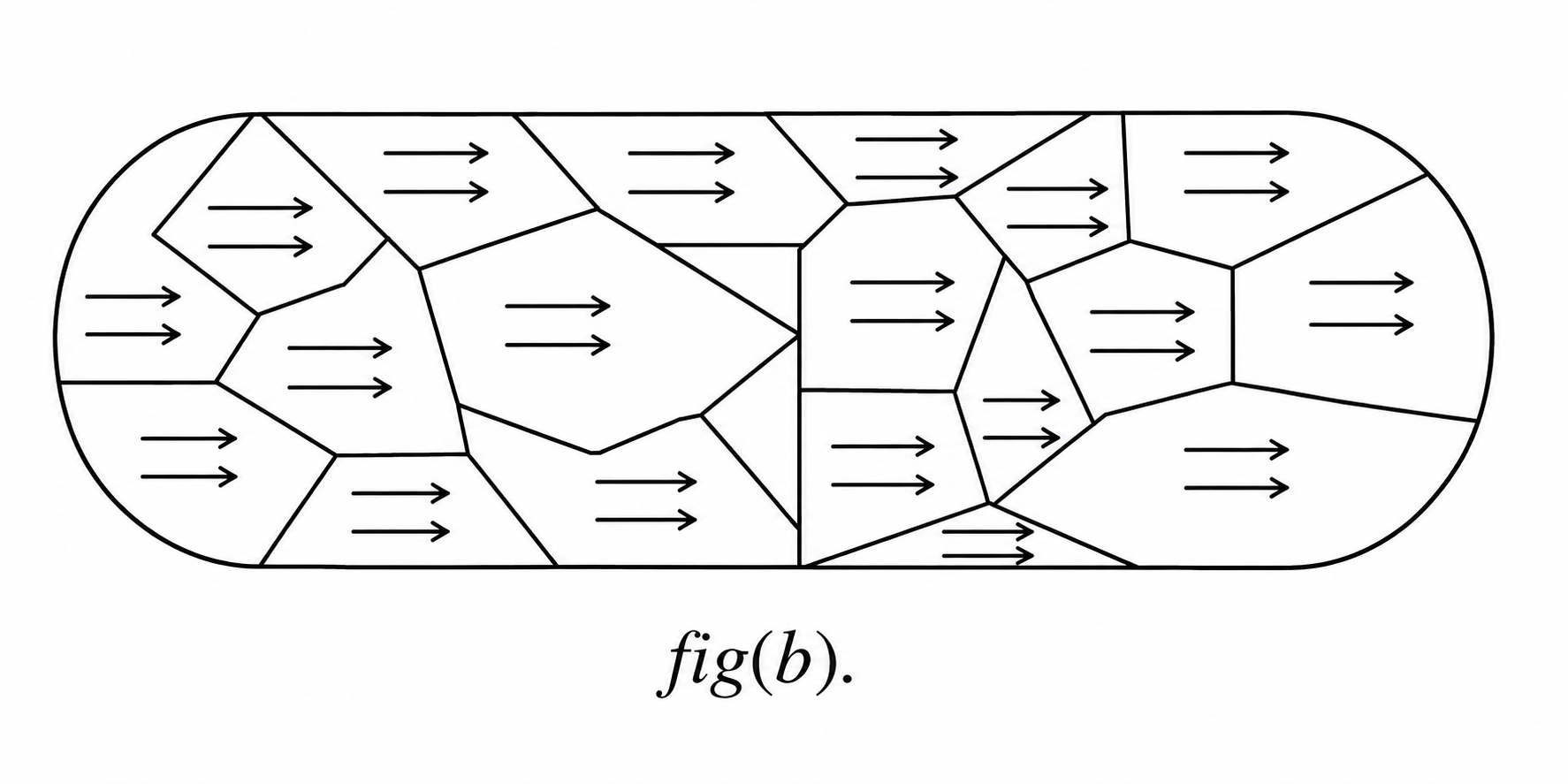
As a result, the iron is magnetized and behaves like a magnet having its own north and south poles.
i. Soft iron vs steel:
In soft iron, the domains are easily oriented on applying an external field and return to random position when the field is removed, steel is not so easily oriented to change order. It requires very strong external field, but once oriented, retains the alignment. That is why, steel is used to make permanent magnets.
ii. non-ferromagnetic materials:
In non-ferromagnetic materials, such as aluminium and copper, the formation of magnetic domains does not occur, so magnetism cannot be induced into these substances.